Microsoft
Designing an AI-Powered Assistant for Specialized Educators
Background
Specialized educators including ESL teachers, speech pathologists, special education coordinators, face impossible demands. They juggle multiple classrooms, manage complex schedules, and serve students with different needs, all while drowning in administrative overhead.
We conducted a 6-month mixed-methods study to understand how AI could support these underserved educators without compromising their expertise or agency.
Final Solution
Research
Rather than assuming technology solutions, we led with foundational research to understand the human rhythms of teaching before designing any intervention. We moved systematically from raw educator voices to strategic business recommendations using a rigorous research continuum.
Primary Research Question
How might we support elementary educators with an AI tool that reduces burden and enhances collaboration, without compromising agency or trust?
Methods Used
Participants
We conducted 15+ stakeholder interviews across NYC, CA, PA, and TX school districts to get an initial understanding of how the education system operates and to identify any shared pain points.
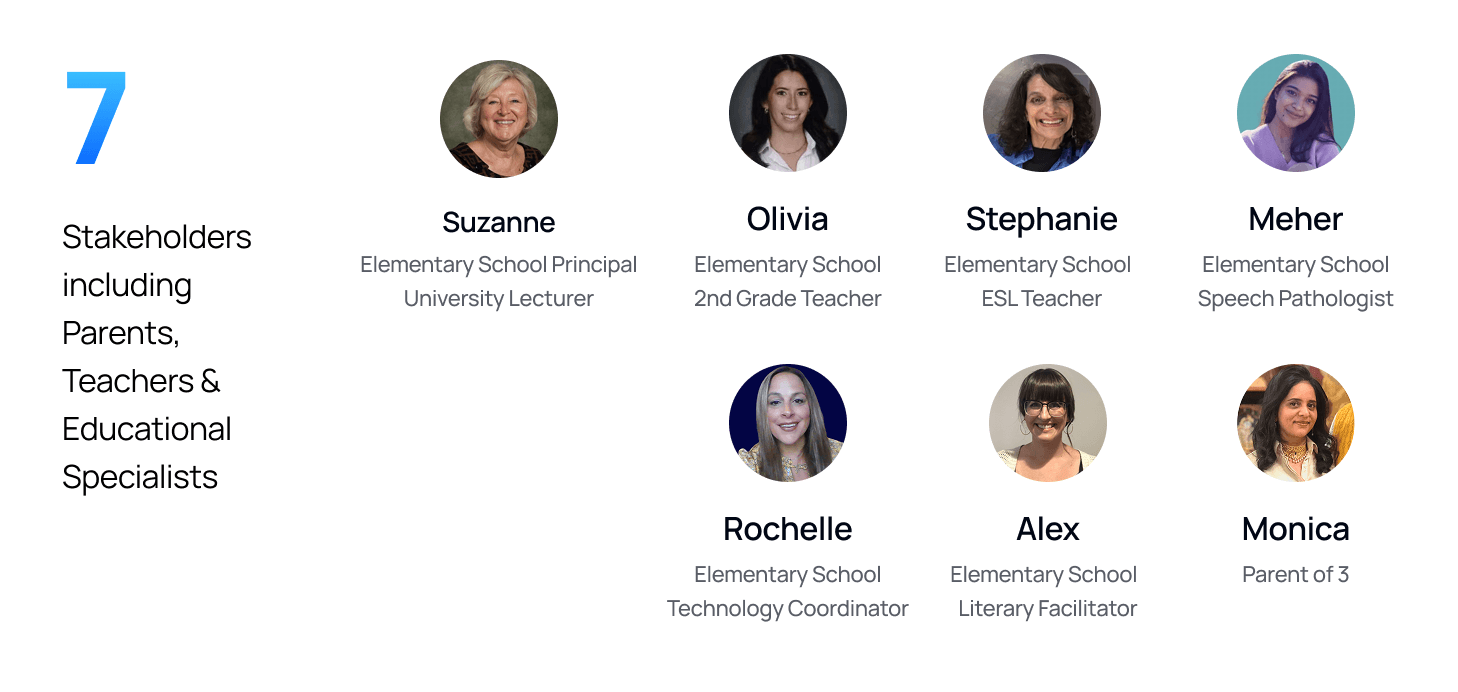
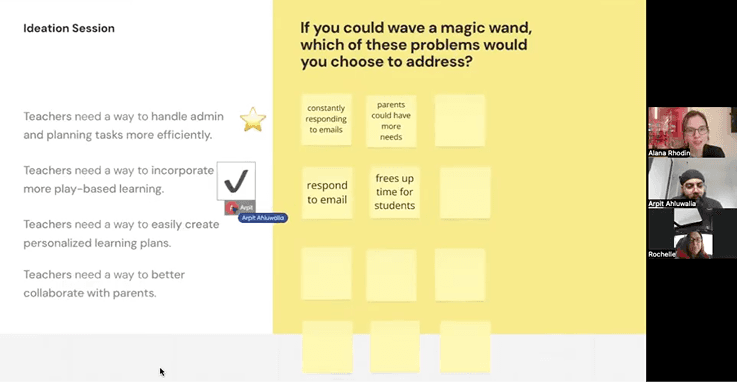
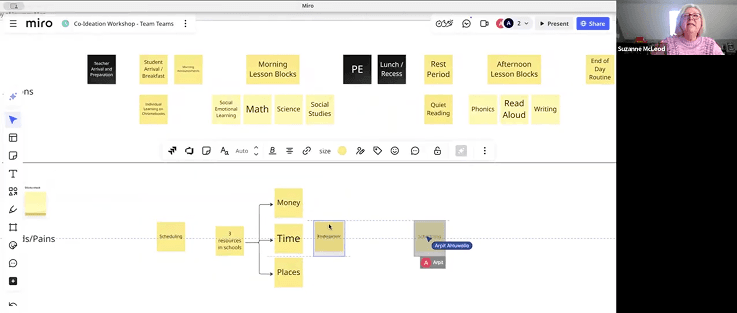
We also facilitated Co-Design Workshops (7 sessions across 3 rounds, 60-75 minutes each) which ensured our solution was built with and for teachers every step of the process from ideation to prototype.
Problems Identified
Our research revealed a system under immense strain. The data painted a clear picture, and the voices of educators, parents, and administrators brought it to life.
Elementary teachers spend an average of 15 hours outside the classroom each week on planning and preparation, 12 of which are unpaid.
"I'm juggling six classrooms. My 'planning period' is 15-20 minutes long per classroom, and I usually don't have enough time as I would need."
- Speech Pathologist, NYCTeacher turnover rates at a 20-year high, with more than 40% of new teachers leaving the profession within their first five years.
"Teachers could use help communicating with parents. Inconsistent use of technology from the teachers is harming the kids."
- Mother of 3, CAThe Bigger Question
"How is this (AI in education) gonna happen? Where is the funding gonna come from? How are you gonna train the staff?"
- Elementary School PrincipalOpportunity Areas
Productivity
Teachers need a way to handle admin and planning tasks more efficiently.
"One of the really annoying things that I had to do as a speech therapist in a school is make my own schedule...I feel that AI would be beneficial in helping the providers, the clinicians, [and] the teachers complete the documentation and their admin work."

Communication
Teachers need a way to better communicate and collaborate.
"Sometimes specialists and class teachers don't meet for weeks, it's very per-needs basis and this lack of communication can dampen the child's progress."
Personalization
Teachers need a way to easily create personalized learning plans.
"How do you differentiate instruction for that range of kids? That is hugely time consuming for teachers...actually creating the lesson plans based on the kids needs. I think AI has a huge application there."

Student Achievement
Teachers need support to address diverse learning needs and facilitating an equitable learning experience.
"I look at my kindergarten students from 30 years ago - they were so ready for first grade. And not so much right now because they've taken play out of the kindergarten classroom. You can't put just AI instruction into a kindergarten classroom, they need play as part of their learning."
Competitive Research
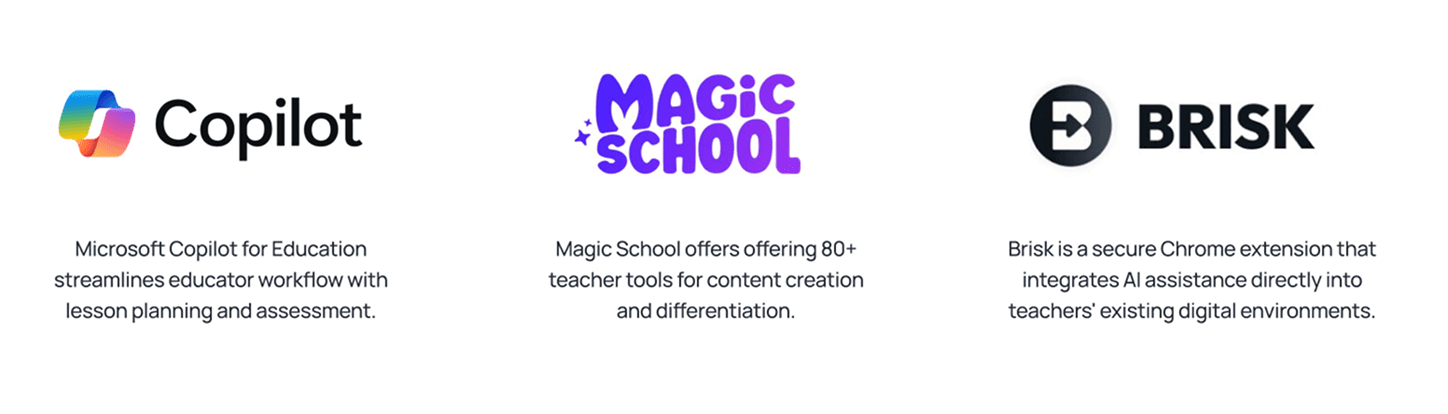
We examined current AI education tools but we quickly found these platforms generalize and try to address foundational classroom needs, but not so much as specialized educators and their needs.
Co-Design Principles
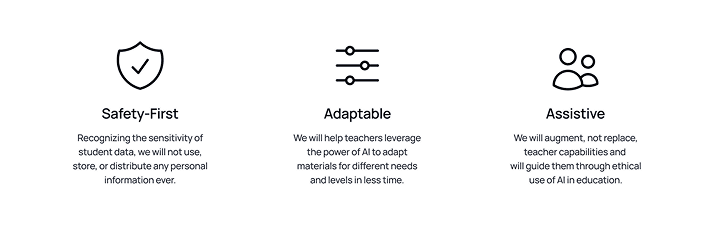
Now that we had a concept in mind, but we before we started designing we needed a guide to our process. So, we co-created principles that prioritize ethics, adaptability, and educator empowerment and set the foundation of the value we were trying to embody as a product and organization.
Final Prototype
Key Enablements validated through Research
Personalize instruction for every student.
Easily coordinate with classroom teachers to manage student sessions and progress.
Streamline administrative tasks with an AI assistant
Enables communication & coordination on the go with mobile version
Takeaways
Strategic research drives business strategy not just validates design decisions. By starting with human needs rather than technology capabilities, we discovered underserved communities and built solutions that truly matter.
The most impactful UX research doesn't just inform product decisions; it reframes entire problem spaces. This project demonstrated that systematic, human-centered research can fundamentally shift how organizations think about problems, leading to more meaningful and impactful solutions.